


Intelligence That Understands
Physics.
Not Just Patterns.
We build industrial intelligence grounded in engineering laws — explainable, auditable, and sovereign by design. This is how we think about the future of intelligence in industry.

Industrial Intelligence
Shouldn't Be
a Black Box.
Most intelligent systems give engineers answers without reasons. In high-stakes industrial environments, that's not intelligence — it's a liability. We build systems that can always explain their reasoning in engineering terms.
- Every prediction traced back to physical laws
- Decisions auditable by domain engineers
- No dependency on opaque vendor models
- Compliant with emerging EU AI Act requirements

- No physical grounding
- Cannot explain failures
- Breaks outside training data
- Vendor-dependent risk
- Grounded in engineering laws
- Every decision explainable
- Robust beyond training conditions
- Sovereign & auditable
Six Pillars of
Engineering Intelligence.
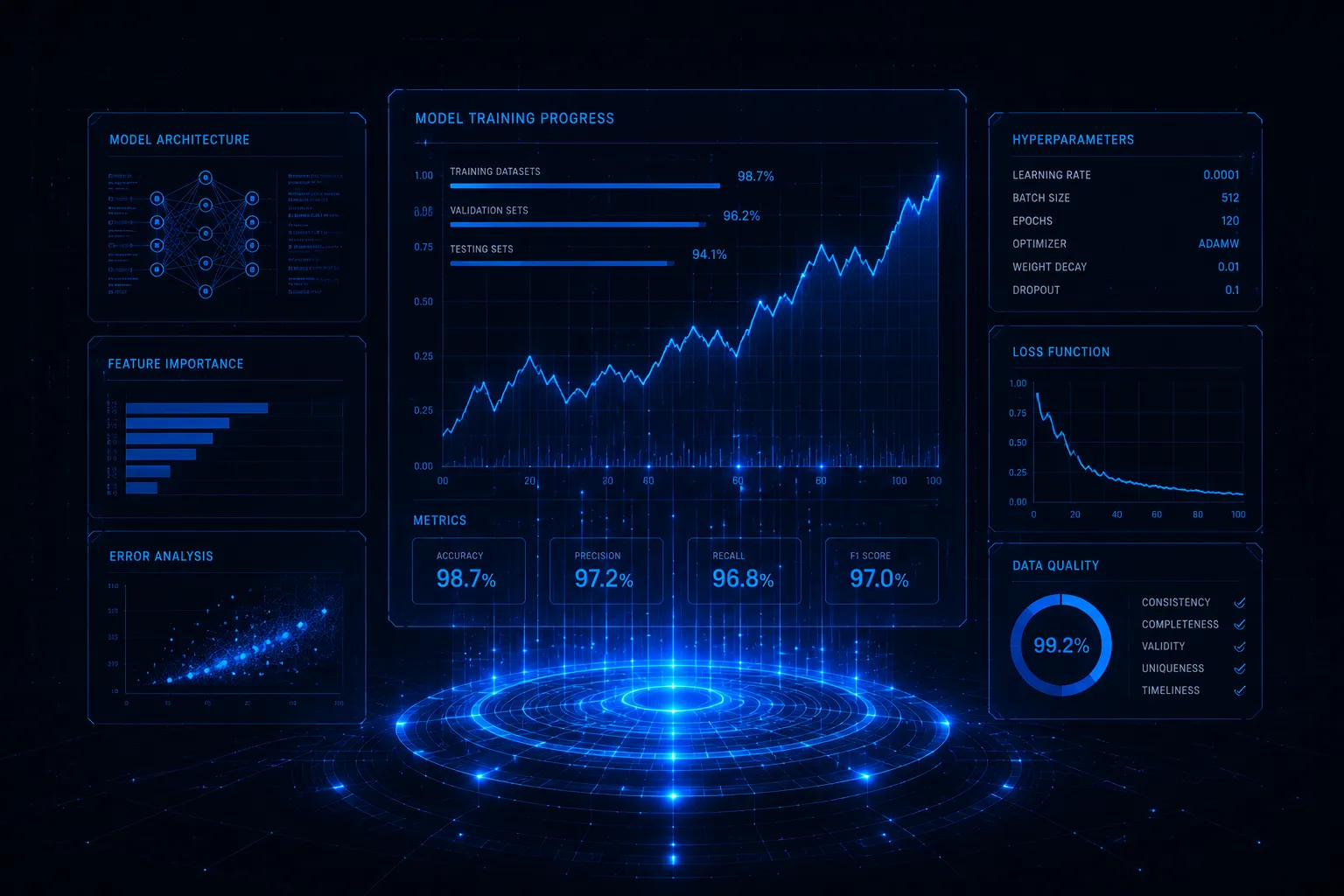
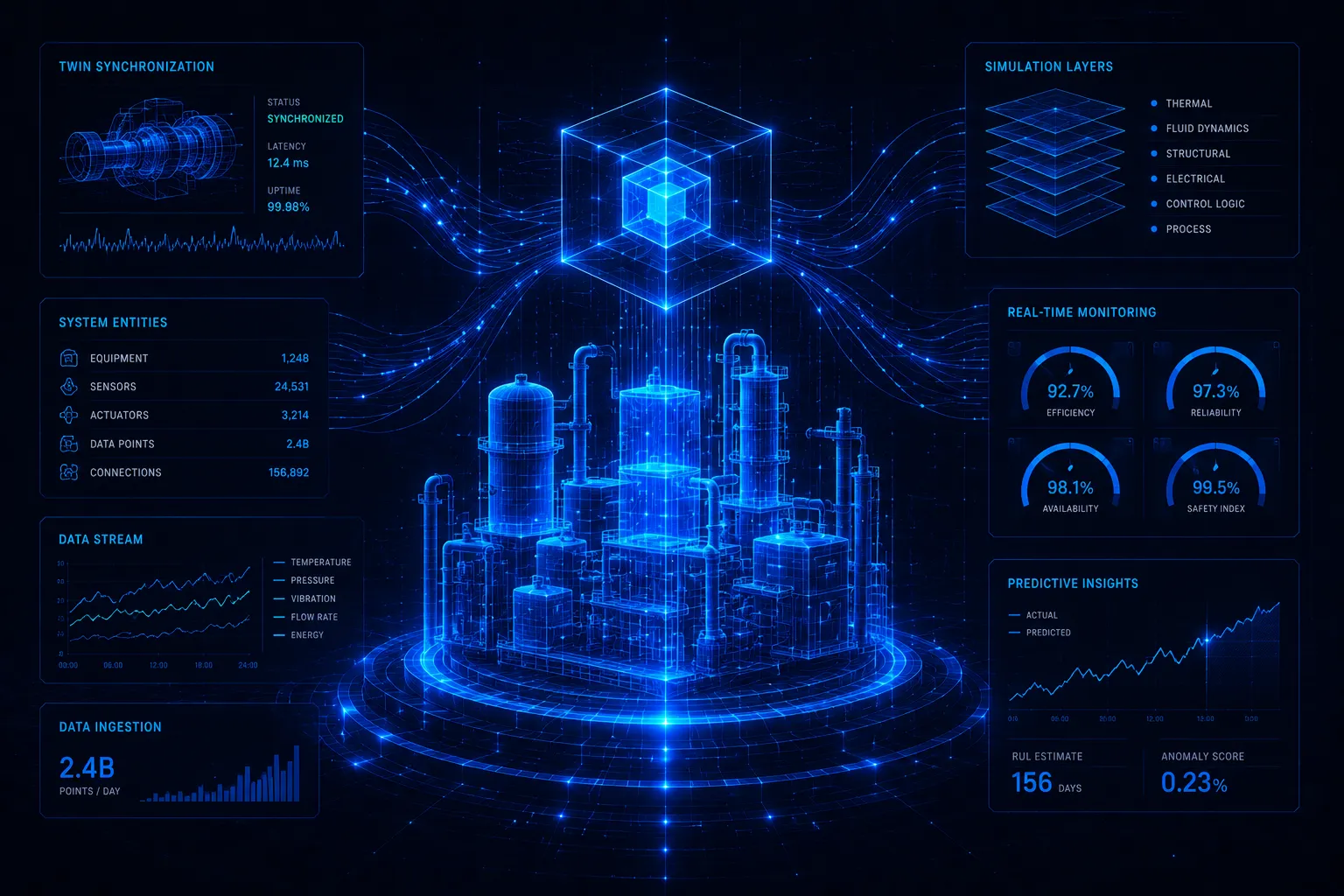
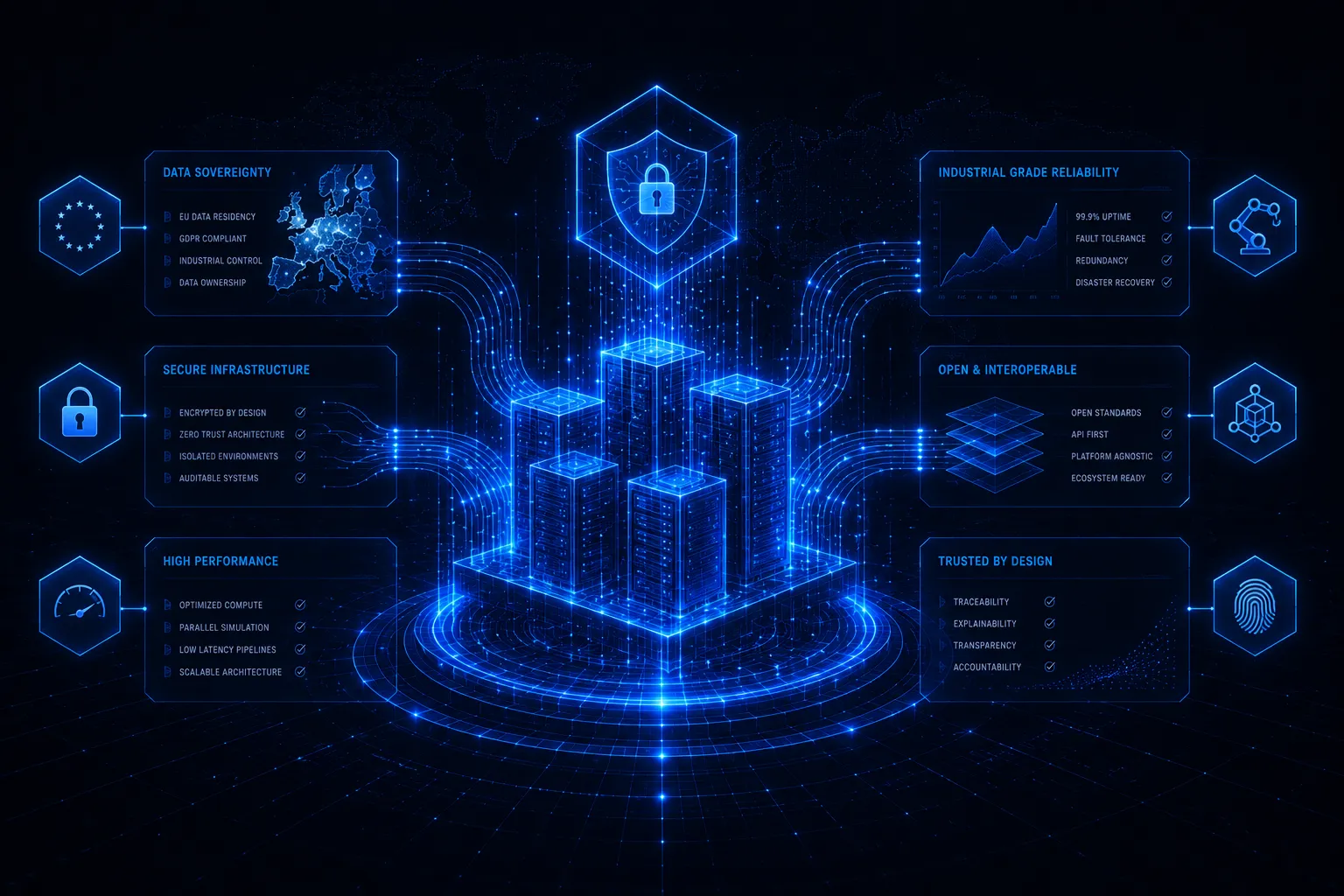
Each research domain represents a foundational commitment — not a product feature, but a scientific discipline we build on every day.


A Continuous Research
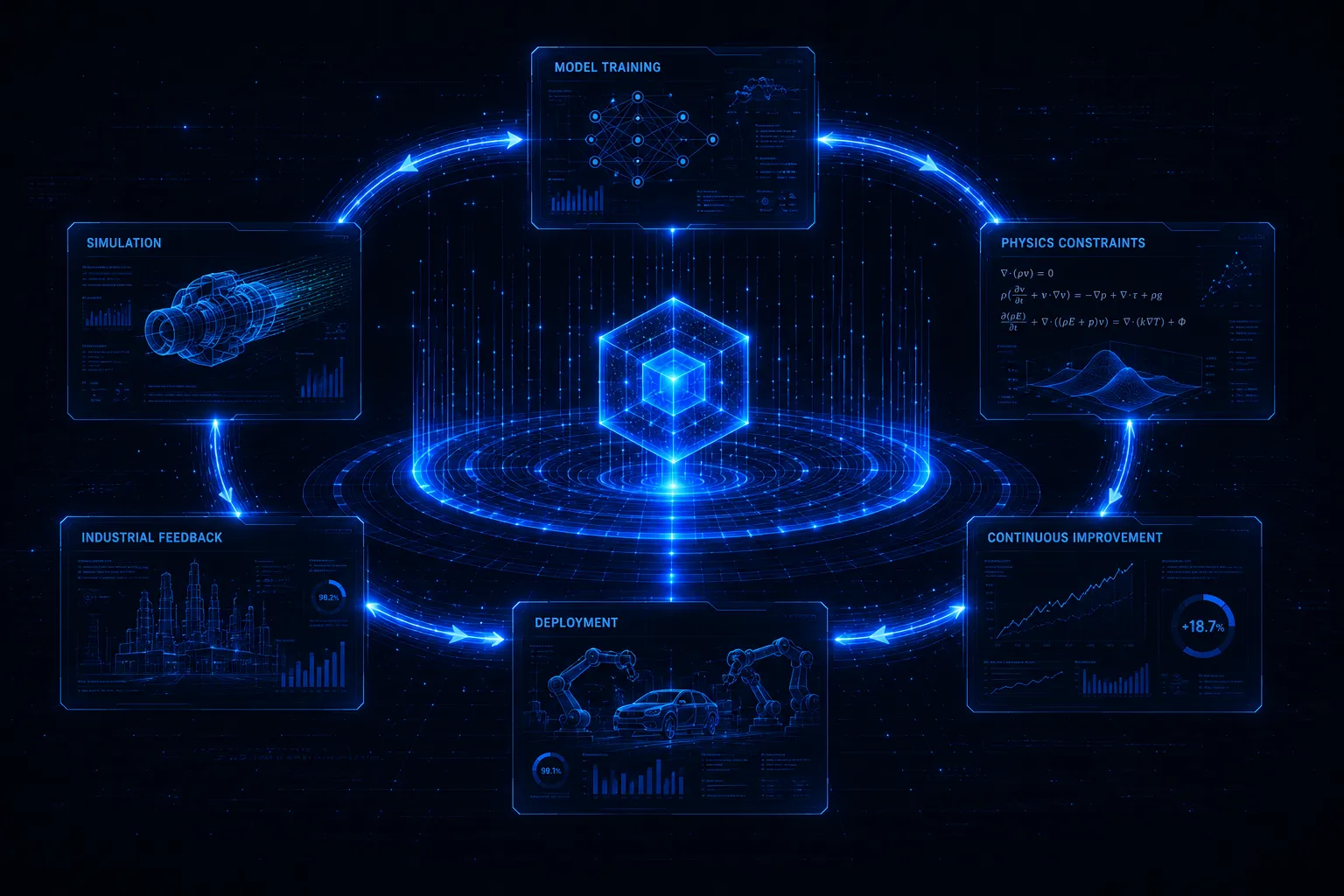
& Engineering Loop.
Our research process is iterative and self-reinforcing — every deployment generates new data, which feeds better models, which enable more precise engineering.
Areas of Exploration.
Ten active research domains — each mapped to a critical industrial engineering challenge that current systems cannot reliably solve.


Building European
Industrial Intelligence.
Europe has the engineering heritage, the industrial depth, and the regulatory maturity to lead the next chapter of industrial intelligence. We are building the intelligence layer that makes that leadership real.
- Research conducted entirely within Europe
- Designed for GDPR, NIS2, and EU AI Act compliance
- No dependency on non-European intelligence infrastructure
- Advancing Europe's industrial competitiveness

Open to Research &
Industrial Collaboration.
We are actively exploring partnerships and collaborations to advance Industrial Intelligence through scientific research, engineering innovation, and real-world industrial impact.
Engineering the Future
Requires More Than Algorithms.
It requires physics, validation, explainability, and industrial intelligence built for the real world.
